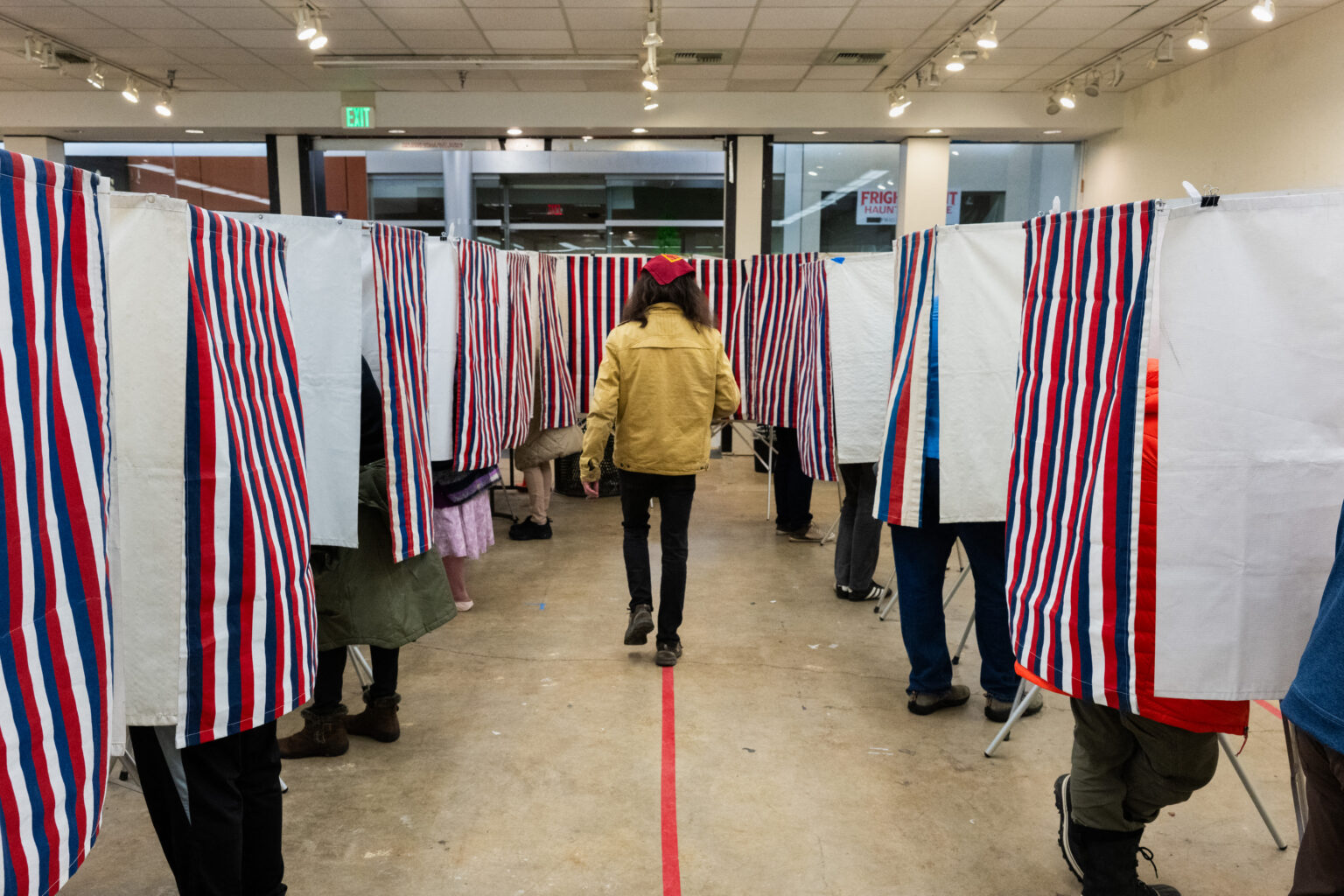
A high-stakes legal debate has erupted over the scope of long-standing civil rights protections, centered on whether statutory prohibitions against voter intimidation bind the federal government's own conduct. As civil rights organizations challenge the administration's deployment of federal personnel to polling sites, legal filings from the Department of Justice have advanced a novel defense: that statutory protections barring voter coercion do not restrict actions taken by federal authorities.
The controversy stems from civil lawsuits filed ahead of national elections, including a challenge by the NAACP seeking to enjoin federal law enforcement components from serving as election observers. Plaintiffs contend that deploying armed or uniform-adjacent federal personnel near ballot boxes violates Section 11(b) of the Civil Rights Act, which prohibits any "person, whether acting under color of law or otherwise" from intimidating, threatening, or coercing voters or election workers.
The Legal Scope of Statutory Protections
In response to these challenges, government attorneys argued that Section 11(b) does not apply to the federal government itself. The Justice Department supported this position by citing the statute's express enforcement mechanism, which empowers the Attorney General to bring civil actions for preventive relief in the name of the United States. According to the government's filings, because the statute establishes the federal government as the enforcing party, it implies the prohibition was not designed to apply to the federal sovereign.
To reinforce this statutory interpretation, government filings referenced a judicial dissent from the Ninth Circuit Court of Appeals. In that opinion, a federal circuit judge cited Supreme Court precedent establishing that statutory references to a "person" acting under color of law generally exclude the federal government unless explicitly stated by Congress. Based on this reading, federal actions—including administrative enforcement initiatives—fall outside the direct reach of Section 11(b).
Despite asserting this statutory immunity in court, the Justice Department maintained in court documents that its Civil Rights Division is taking appropriate operational measures. The department stated it is taking steps to ensure that volunteers drawn from its various law enforcement agencies do not act in an official law enforcement capacity while monitoring election procedures.
Observers React to the Department's Position
Legal experts, civil rights advocates, and public observers have reacted with sharp skepticism to the government's legal theory, warning that exempting federal agencies from anti-intimidation provisions undermines foundational democratic guarantees.
"It would be weird if the ban on voter intimidation did not apply to the most powerful entity in the nation while they currently hold office and would have an interest in influencing the outcomes of elections."
Others noted the apparent contradiction between public-facing civil rights protections and the government's technical defense in court, expressing concern over the institutional precedent being set.
"Imagine thinking that the first amendment only applied to the federal government punishing peoples' speech, but that a voter intimidation ban shouldn't apply to the federal government . . . Jesus christ."
Some legal commentators pointed out that while defense attorneys frequently raise threshold sovereign immunity claims to secure pre-trial dismissals, asserting broad federal exemptions in public voting disputes carries significant constitutional implications.
Federal Authority and State Election Oversight
The dispute occurs against a broader backdrop of federal-state friction regarding election administration. Under the U.S. Constitution, states maintain primary authority over setting the times, places, and manner of holding elections, subject to statutory regulation by Congress. Recent federal court rulings have underscored these jurisdictional boundaries.
In a separate proceeding, a federal district judge issued a temporary restraining order directing the federal government to cease demands that local election officials segregate specific ballots or refrain from counting votes cast by individuals alleged to be ineligible. The ruling also prohibited federal authorities from threatening local election staff with criminal prosecution over ballot-processing procedures, reinforcing that administrative enforcement cannot bypass established statutory mechanisms or state authority.
As federal courts evaluate the pending motions, the central legal question remains whether statutory safeguards built to protect access to the ballot box limit every tier of government authority, or whether federal agencies operate under distinct statutory exemptions.

