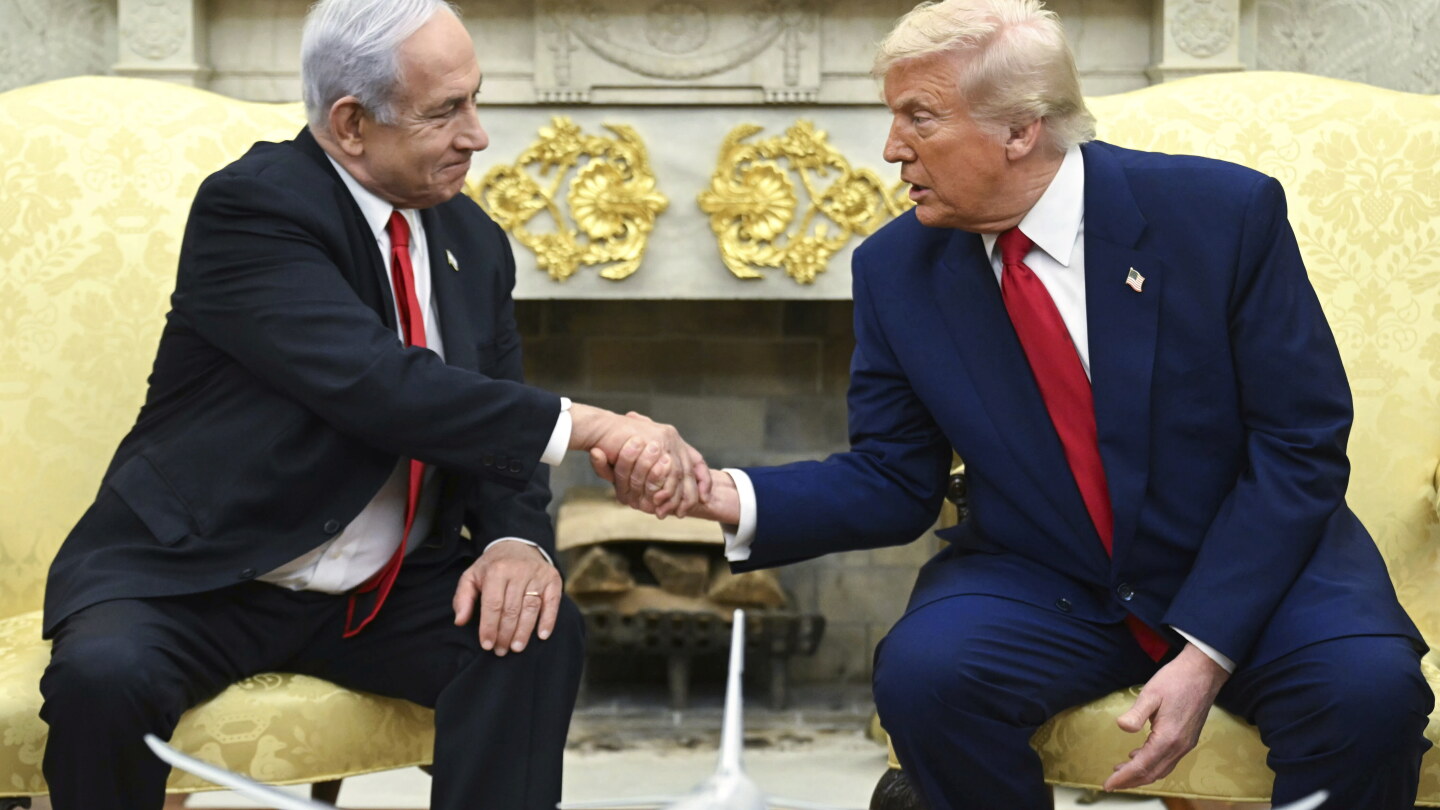
President Donald Trump announced that the United States will halt its $4 billion annual aid package to Israel beginning in 2027, shifting the foreign policy baseline between Washington and its closest Middle East ally. Speaking during a phone interview with Fox News Channel, Trump outlined a plan under which the long-standing direct financial assistance will come to an end, though the U.S. will continue to sell military equipment and arms directly to Israel.
According to Trump, the decision followed discussions with Israeli Prime Minister Benjamin Netanyahu that have spanned several years. Trump asserted that Israel’s modern economy no longer requires direct financial assistance and noted that the foreign aid structure had grown into a substantial outlay for the American government.
“You can consider it barter. You can consider military aid or cash,” Trump said. “Look, we give them $4 billion of things and money, and they don’t need it. And I was approached by Bibi Netanyahu, and we’ve been talking about it for a couple of years because it’s a lot of money.”
Foreign Policy Debates and Political Currents
The proposed pivot arrives alongside broader political debates over foreign spending and military aid. Trump explicitly pointed to domestic political friction surrounding security funding, highlighting how annual allocations have become a frequent point of criticism for progressive political figures, including candidates such as Michigan Senate contender Abdul El-Sayed.
While the administration framed the shift as a joint decision grounded in fiscal independence, the announcement sparked intense public discussion regarding international diplomacy, political strategy, and election-season timing.
"The president said Israeli Prime Minister Benjamin Netanyahu had approached him about the idea."
"Maybe because BiBi knows he's not going to be in power, and wants to screw the next guy in?"
Others reflected on how such strategic policy declarations ripple through domestic political discourse, observing:
"Weird timing. Not sure how that message would swing anyone to his preferred candidates."
Contextualizing U.S. Security Assistance
The annual $4 billion package forms a cornerstone of American security support in the region. Recent independent research highlights the scale of financial and military commitments directed toward Middle Eastern security in recent years. An academic study published on the second anniversary of the October 7, 2023 attacks showed that under both the Biden and Trump administrations, the U.S. provided at least $21.7 billion in military assistance to Israel following the outbreak of the Gaza war.
A separate report released by the Costs of War project at Brown University’s Watson School of International and Public Affairs estimated that the U.S. spent an additional $10 billion on security aid and broader military operations in the region over a two-year span. These comprehensive accountings demonstrate the deep financial and logistical ties connecting the two nations.
Observers of foreign policy noted that replacing direct grants with armaments sales creates a fundamental change in how bilateral defense obligations are organized.
"This will hurt the stocks of US arms makers more than it will hurt Israel."
"What they actually mean is they will no longer call that money aid. Still sending it, just not calling it aid anymore."
The Path Toward 2027
Transitioning from annual financial aid to standard international arms sales marks a significant redefinition of the U.S.–Israel alliance. While direct grants under the current bilateral framework are slated to wrap up by 2027, defense cooperation between Washington and Jerusalem will remain active through commercial sales, joint technology development, and defense procurement. As legislative frameworks and foreign policy priorities evolve, the timeline toward 2027 will test how effectively both allies adjust to a revamped financial and defense partnership.

